Love In Translation
Sometimes, we need subtitles.

Words We Don't Know We're Speaking
No language is ever the same, and language shapes how we see the world and identify our feelings. It's easier to recognize things when we have the language for them. While exploring the fascinating world of untranslatable words, I found myself captivated by terms from different cultures that resist direct translation yet express something profound about the people who created them.
Consider the word ilunga from Tshiluba, spoken in Southwest Congo. As linguist Christopher Moore explains, ilunga describes "a person who is ready to forgive any transgression a first time and then to tolerate it for a second time, but never for a third time." The word contains an entire philosophy of forgiveness and boundaries that may require paragraphs to explain in English.
What strikes me about ilunga is this assumption that shared language equals shared understanding. Most people who speak Tshiluba probably couldn't define ilunga any better than I could define face to someone who's never encountered the concept. You can describe it using words like pride, honor, and social standing, but none of those quite capture the emotional calculus of "losing face" in many East Asian cultures, where shame isn't just internal but relational. How could you trust that someone sees your red if they’ve only ever known the world in black and white?
We operate on instinct, on ~*vibes*~, using words relationally without digging into its deeper (or literal) implications. But even this intuitive grasp varies more than we assume. Consider how a child might call plastic flowers 'not natural' while accepting that Cotton Candy grapes are. Our sense of what is natural reflects cultural categories we've absorbed, not some universal recognition. What we mistake for shared intuition is often shared conditioning, and 'nature' itself resists translation across cultures, existing as conceptual territory we assume is universal but reveals itself as highly contextual.
So when I imagine someone explaining ilunga to me, I wonder if they're really conveying understanding or just giving me coordinates to navigate around a mystery I'll never fully inhabit. Maybe most native speakers have never considered the word's implications at all. They feel the contours of the word, slotting it subconsciously into the puzzle of expression it completes, just as I feel my way through empathy without ever defining what empathy actually is. It’s humbling and unsettling to realize how much meaning-making happens below conscious thought, in spaces where experience and language dance around each other without ever perfectly aligning.
I think this reflects something deeper about how language shapes our understanding. Just as some cultures have dozens of words for various shades of green while others see green as blue, we all develop unique vocabularies and meanings for the most fundamental human experiences. The word "love" carries vastly distinct meanings depending on who speaks it, and this applies to more words than not. Think about "wrong" and "right," "female" and "male," or even what it means for something to be "existing." "Expectation" might feel like hope to one person and crushing pressure to another. Even "forgiveness" operates on completely separate timelines and conditions across separate worlds of experience.
This is the challenge we face when we try to connect across varied internal landscapes. We don't just speak different languages; we operate with our very own vocabularies of care, boundaries, and connection. We carry our hearts like instruments crafted from everything that shaped us: the people who raised us, the places we grew up, the wounds we nursed, and the joys we celebrated. We're all walking around assuming everyone else is working from the same inner blueprints when really we're speaking entirely subjective languages of meaning.
When we care for someone, we speak fluently in our native tongue of affection, assuming they understand every syllable. We pour ourselves out in the grammar of care we learned at our mother's knee or in the silence of our childhood bedrooms, rarely realizing that the person standing before us learned highly particular syntax of connection. Nowhere is this translation problem more painful than in our most intimate relationships, where the currencies of care rarely match up the way we expect them to.
The Grammar of Care
The most heartbreaking conflicts in relationships rarely stem from malice. They emerge from the space between two people who are both trying their best to care for each other, but whose definitions of love were written in different ink. One person shows love through acts of service, staying up late to help with a project, remembering to pick up groceries, organizing the chaos of daily life. Another expresses care through emotional availability, long conversations, gentle words, creating space for feelings to be felt and heard. Neither is wrong. Both are loving with the full capacity of their hearts. Yet somehow, each walks away feeling unseen.
When we love someone whose inner workings feel foreign to our own, we are essentially two strangers, attempting to build a bridge between separate continents of experience. Consider the friend who always arrives with thoughtful gifts but never calls when you're going through a hard time. Or the partner who remembers and plans for every birthday, but struggles to remember your anniversary. The parent who worked three jobs to pay for piano lessons but never attended a single recital. The colleague who brings coffee for everyone but never asks how you're doing. Each of these people is offering love in the currency they understand, or maybe just the currency they possess. After all, the ways we show up vary. Some forms of care come easily to us, while others cost more than we know how to give. And sometimes, the one we're trying to love is left feeling unseen, quietly hoping for something else entirely.
What makes this particularly hard is that we rarely articulate our love languages clearly, even to ourselves. Who can know themselves with complete certainty? Many of us don't interrogate why we have our particular preferences and disdains; we treat our emotional nuances as obvious, then feel slighted when others miss them. We build our ideas about love from how we were loved, or not loved, as kids, usually without ever thinking about where those ideas came from or why they feel so natural to us. The person who grew up with parents who showed care through practical support might instinctively believe that handling logistics is the highest form of love. Meanwhile, someone raised in a household where emotions were openly expressed might crave verbal affirmation, and interpret that same practicality as distant or cold.
When we don't name these invisible/unspoken contracts, we create fertile ground for hurt to take root. We offer what we would want to receive, then feel hurt when our gestures aren't met with the reciprocity we expected. We measure others' affection against our own emotional currency, finding them wanting not because they're withholding love, but it gets misinterpreted.
The heartbreak isn't that people refuse to love each other. It's that they do, fiercely and authentically, but their devotion gets scrambled somewhere between intention and interpretation. The friend who waits for invitations instead of extending them isn't indifferent; they're loving through presence rather than pursuit. The partner who responds to your tears with solutions instead of sympathy isn't cold; they're trying to heal your hurt the way they would want theirs tended. The family member who criticizes your decisions isn't sabotaging you; they're offering care wrapped in the belief that challenge sharpens us into who we're meant to become.
But this sounds simpler than it is. The whole thing gets tangled in impossible knots. Can you love a bigot? How do you know if someone is really trying, or just rationalizing their flaws? Sometimes a person's way of showing love is shaped by beliefs that feel fundamentally incompatible with your own humanity. The parent who shows love through rigid control because they believe structure equals safety. The partner who expresses care through constant advice because they think fixing problems is a form of love. The friend who teases instead of saying what they mean, because somewhere along the way, they learned that earnestness was weakness.
Do you stretch to meet them there, recognizing the love underneath the behavior, or is there a line where stretching becomes self-betrayal? I don't know. I really don't. And maybe that's part of what makes connection both so precious and so precarious.
None of this excuses behavior that genuinely wounds or diminishes others.
Love that refuses to see beyond its own patterns can become a kind of beautiful tyranny, even when wrapped in good intentions. The person who insists on loving only in their native tongue while their beloved is clearly speaking another language isn't offering love at all. They're performing it for their own sense of virtue rather than for the other's actual nourishment.
And not every crossed wire is innocent miscommunication. Sometimes what masquerades as an interpretation error is something far more shadowed: when someone's expression of love becomes a vessel for their own need to control, or to discharge their unhealed places. This isn't about clumsy devotion or conflicting vocabularies; it's about actions that leave real damage while wearing love's mask. And most of the time, it’s not intentional because it’s rationalized.
Think of the parent who "loves through guidance" but whose version of care creates subtle erosion that piles over time. Constant critique dressed as improvement, surveillance justified as protection, emotional manipulation that leaves you questioning your own reality. The partner who "shows love by worrying about your wellbeing" but monitors your choices, comments on your body, makes you feel ashamed of your own existence. The friend who "loves you enough to tell the truth" but whose truths feel reckless, offering no comfort or repair.
These patterns reveal the canyon between love that stumbles and behavior that weaponizes affection. Authentic love, even when expressed clumsily, notices its impact on the beloved. It shifts when it learns it's causing harm. It's willing to sit with the discomfort of its own imperfection. Harmful behavior disguised as care, however, clings to its own righteousness. It makes the recipient responsible for receiving "love" that cuts them. It transforms every conversation about damage into a defense of good intentions.
The cruelest part is how these dynamics teach the recipient to doubt their own compass. When someone consistently hurts you while claiming devotion, it becomes nearly impossible to trust your instincts about what tenderness should feel like. You begin wondering if you're too fragile, too needy, if you should simply be grateful for any attention at all.
Learning to distinguish between love that needs interpretation and love that needs boundaries isn't just self-preservation; it's protecting the possibility of real intimacy. Sometimes the most loving act is refusing to accept harm, even when it arrives wrapped in the language of care.
I don't think there's some perfect formula waiting to be discovered here. The whole thing is complicated as fuck, full of contradictions that resist easy answers. Maybe the goal isn't to solve it but to become more graceful in the navigation. Recognizing our differences is just the beginning. The real question becomes: what do we do with this awareness? How do we build bridges across chasms that feel impossible to cross?
Duo Lingo My Love Language, Baby
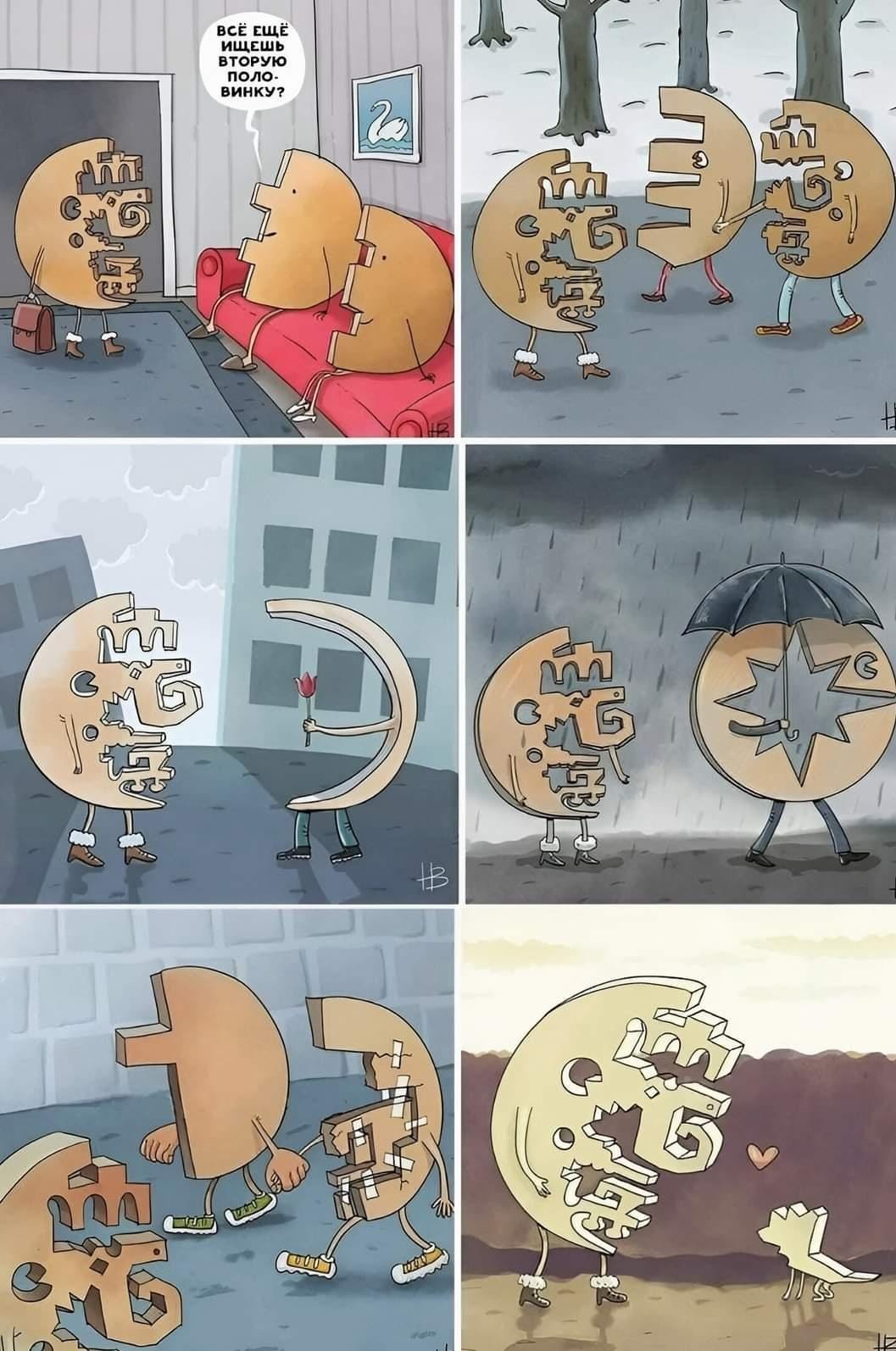
What feels more honest is the idea of emotional bilingualism: learning to recognize love in its many forms while also translating it into expressions that resonate with the people we care about. It's less about finding the "right" way to love and more about paying attention, noticing how someone naturally shows care, what makes their face brighten, what they reach for when they're hurting. Being willing to feel awkward as we try to speak their particular dialect of affection, even when it doesn't come naturally to us.
It also means having conversations that most of us avoid: the vulnerable discussions about what we need, what we appreciate, and what leaves us feeling empty. Sometimes it's hard to even begin those conversations because asking for help can feel like too much, too needy, or too likely to be misunderstood. We fear seeming unreasonable, or worse, being rejected for wanting what we want. But these moments ask us to move beyond assumptions and actually articulate how we experience love and care. They require us to be honest about our own limitations, and curious about others' rather than defensive about our intentions.
Most importantly, it means extending grace to the people who are trying to love us, even when their efforts don't land the way they intended. Behind every uneven gesture is a person reaching toward connection in the only way they know how. Love isn't a universal language with perfect grammar. It's a collection of dialects that require patience, decoding, rewriting, and practice to understand.
The wholesome part is that when we do learn to speak each other's love languages, when we make the effort to tighten the gap between our natural way of caring and the way someone else receives care, we create something sincere. A relationship where someone feels seen not just for who they are at their core, but for how they try.
Ours Only
In the end, love is not a feeling we fall into but a skill we build, one conversation, one moment of recognition, one act of translation at a time. The relationships that endure aren't those where people naturally speak the same emotional language, but those where people commit to becoming fluent in each other's dialects of care. They are built by those who understand that love without effort is just sentiment, and that the willingness to be changed by another person's needs is what transforms affection into something that can actually sustain two human lives.
We never really know what any relationship will become when it begins. Like the caterpillar that has no concept of wings or flight, we enter into loving others with only the barest sense of what we might make together. We reach for connection across the space between inner worlds, not knowing whether we'll find a shared language or remain forever lost in translation. We cannot predict whether our different ways of caring will eventually weave together into something stronger, or whether they will always pull against each other like mismatched threads.
Sometimes, love gets lost and doesn't return. Sometimes people remain foreign to each other despite years of trying. But occasionally, more often than cynicism would suggest, less often than hope would like, something clicks. Not perfect understanding, but workable comprehension. Not seamless communication, but the choice to keep showing up even when it's hard.
But we can look back and see how every meaningful relationship began: with two people from separate internal landscapes who decided to try. Who chose curiosity over judgment, patience over frustration, growth over comfort. The most profound love stories are about people who hurt each other and then do the work to hurt each other less. They are about individuals who choose to set aside the comfort of loving in their own familiar way and learn to love in the way that actually reaches across the space between two separate lives.
These relationships aren't born from effortless compatibility. They're built on the unglamorous work of paying attention: noticing what makes someone feel seen, remembering what leaves them feeling empty, being willing to feel awkward while learning their particular way of being human. They're sustained not by knowing everything about each other, but by understanding enough to keep choosing each other anyway.
This is the difference between loving someone and loving them well, between offering what we have to give and offering what they need to receive. And when we get it right, even imperfectly, even temporarily, what we create justifies all the fumbling that came before: two people who see each other clearly and choose to stay anyway, speaking a language they create together from the best parts of all the languages they brought from home.
And I think that's the closest thing we have to a universal language: not perfect fluency, not always getting it right, but the attention and trying. The slow, imperfect, human act of learning how to love someone in a way they can actually feel.
So, I read it again. Every expression feels like truth. Yes, I wonder how you know it, and I marvel in your ability to express it, but also wonder how well knowing it enables you to put it into practice.
How did you become who you are? It takes some one special to think and write that deeply.